Recycling rare earth elements and critical minerals
Cyclic Materials recovers rare earths from end-of-life products, building a secure and circular supply chain for materials that are critical to the global economy.
The case for recycling end-of-life materials
Rare earth elements (REEs) are essential to the manufacturing of countless products that power our modern economy, and the demand for REE is set to grow sharply in the coming decade, increasing pressure on already concentrated supply chains.
By recovering REEs from end-of-life products, we can significantly reduce the reliance on current mining and processing infrastructure, building a more resilient supply chain for rare earths through “urban mining”. In closing the loop, we can secure the materials we need by creating a circular supply that mitigates the resource intensity and timeline challenges of traditional mining.
The Cyclic process:
from waste to resource




Feedstock Sourcing
Cyclic Materials sources large quantities of end-of-life products containing rare earth permanent magnets from across a wide range of industries. This is done through an extensive network of OEMs, automotive recyclers, electronics recyclers, IT asset disposal firms, and numerous additional recycling partners.

Magnet Separation
End-of-life products are processed using Cyclic Materials' proprietary MagCycle® technology, which mechanically separates rare earth magnet materials from the rest of the product without manual intervention.
Through this process, we produce rare earth magnet material, Mag-Xtract™, while also recovering copper, aluminum, and clean ferrous materials for direct reintegration into the circular supply chain.

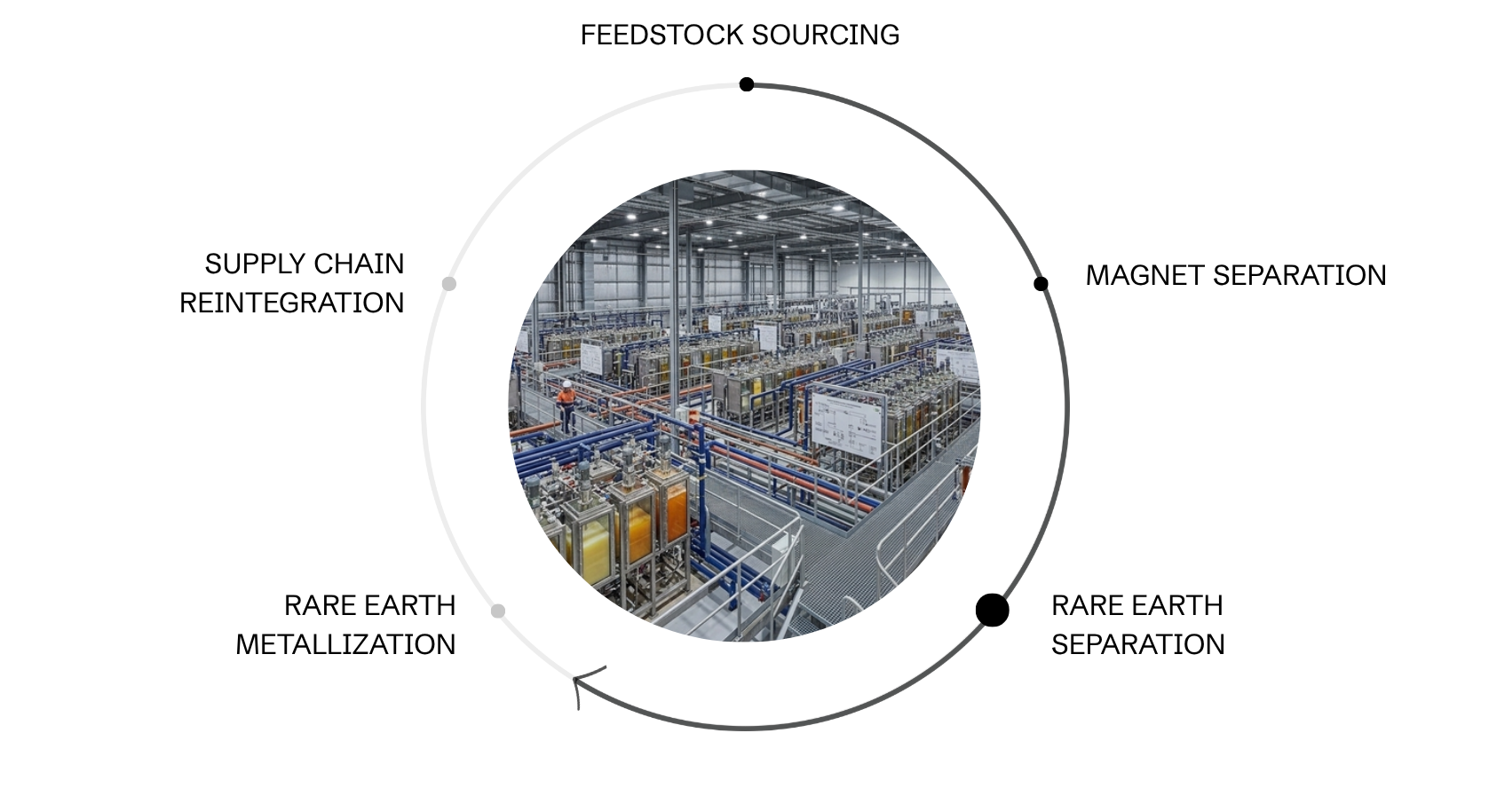
Rare Earth Separation
Using Cyclic Materials' proprietary hydrometallurgical refining processes, REEPure℠, we recover mixed rare earth oxides (MREOs) from Mag-Xtract™ and magnet production waste.
These materials can then undergo solvent extraction to produce high-purity rare earth oxides, including neodymium-praseodymium (NdPr), terbium (Tb), and dysprosium (Dy).

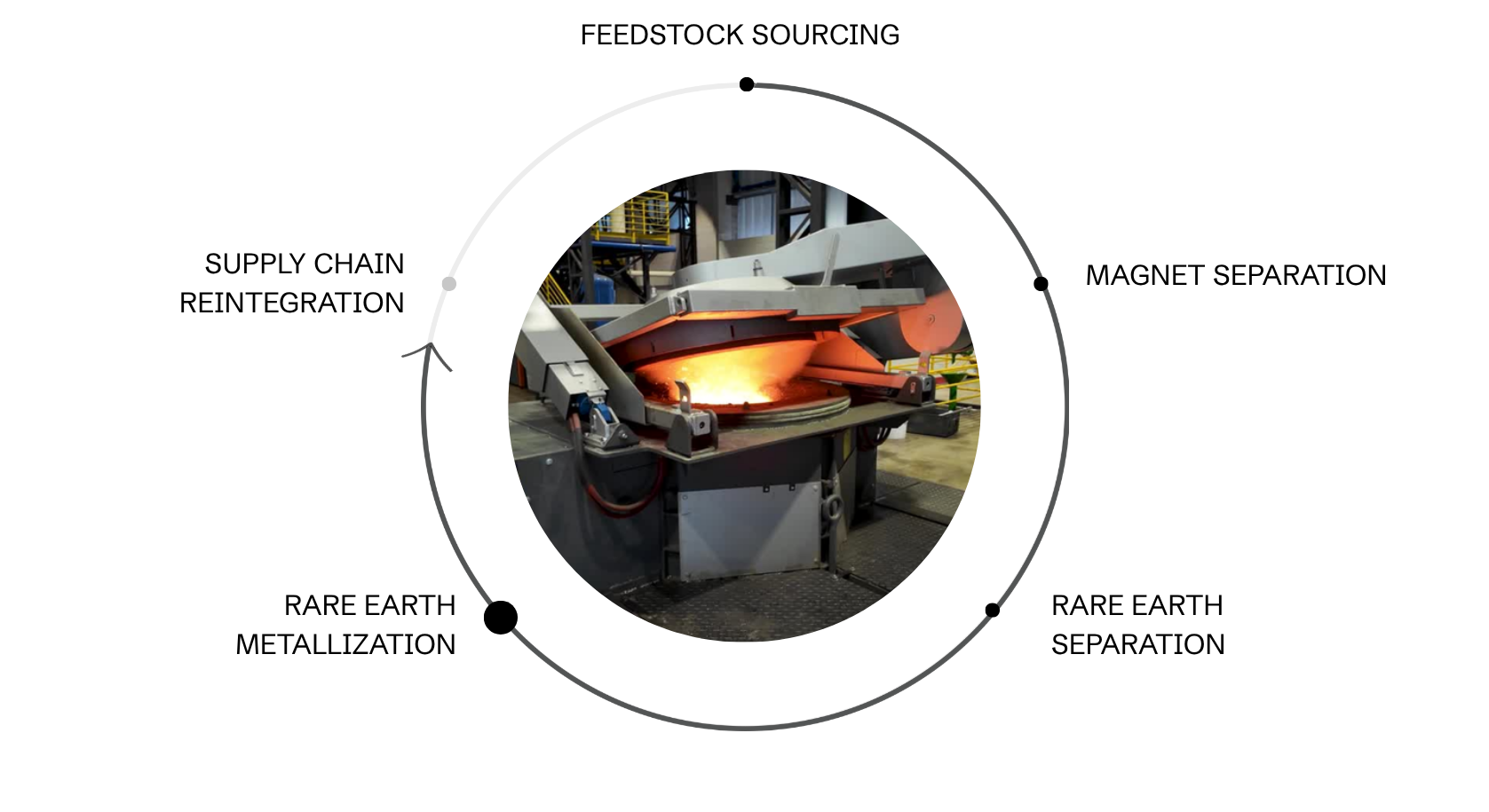
Rare Earth Metallization
Through metallization, high-purity rare earth oxides can be converted into rare earth metals, providing the metallic form needed for alloy production and permanent magnet manufacturing. These rare earth metals can include neodymium-praseodymium (NdPr), terbium (Tb), and dysprosium (Dy).
Supply Chain Reintegration
Recovered rare earth materials can be reintegrated into the supply chain, supporting the production of new alloys and permanent magnets across different industries. This closed-loop process supports a resilient, domestic rare earth supply chain while reducing reliance on newly mined materials.
Through strategic partnerships, Cyclic Materials also offers industry-leading Digital Product Passports, enabling traceability and regulatory compliance across the value chain.

Real impact, real change
Closing the loop across advanced industries
Cyclic Materials recycles magnet-bearing products and manufacturing scrap, returning valuable rare earth materials to the advanced manufacturing supply chains that depend on them.


Trusted by industry leaders
Proud to be backed by top-tier investors who support our mission to build a reliable and responsible supply chain for critical materials.

.png)









Careers at Cyclic Materials
Join a team shaping the future of rare earth recycling. We’re looking for passionate individuals who want to make a real impact.
Stay up to date with Cyclic Materials
.png)
.png)
_real.png)





.png)
Become our supplier
Your end-of-life components may contain valuable materials
Join our feedstock supplier program.
Connect with us
Let’s work together to build a resilient supply chain
Explore opportunities to collaborate for lasting impact.
